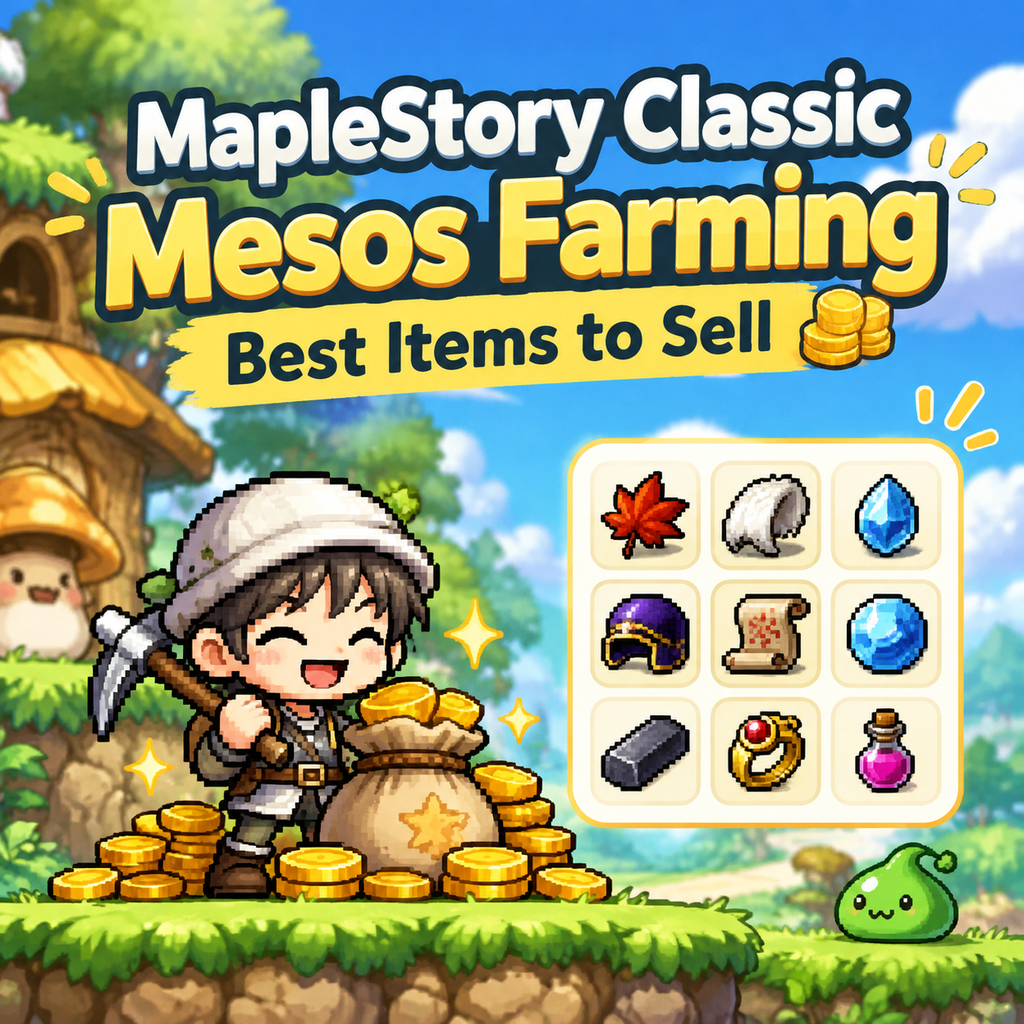
Making Mesos in MapleStory Classic World is not just about killing as many monsters as possible. If you know which drops are worth keeping and which items other players need, you can build up your funds while leveling instead of spending hours farming without a clear goal.
Early in the game, potions, equipment upgrades, and other basic expenses can quickly eat into your savings. Selling useful drops is one of the easiest ways to keep your wallet from running empty. As you progress, monster drops, equipment, ores, and scrolls can become more attractive sources of income, depending on player demand and market prices.
The trick is knowing what to pick up, what to sell, and when an item is worth holding on to. Here are the best types of items to focus on when farming Mesos in MapleStory Classic World.
- Equipment Drops from Monsters
Equipment is one of the first things worth checking when you start farming for Mesos. Monsters can drop weapons, armor, and other gear that players may need for leveling or replacing outdated equipment.
Low-level equipment is not always valuable, but certain pieces can sell if they are useful to popular classes or difficult to obtain through normal progression. Before selling everything to an NPC, check whether another player might be interested in the item.
Pay attention to the equipment's level requirement, class restrictions, and stats. A weapon with useful attributes may attract more interest than an ordinary piece of armor that players can easily replace.
However, do not assume every rare-looking item is worth a high price. Demand matters just as much as rarity, and some equipment may take a long time to sell.
Players familiar with MapleStory Global Mesos farming may already know how important market demand can be. The same principle applies here, but prices and item availability can differ between game versions. Always check the Classic World market rather than relying on prices from another server.
- Monster Drops Used for Quests
Quest materials are another useful category to collect while training. Some players would rather buy the items they need than spend time hunting specific monsters, creating opportunities for sellers.
Common monster drops can include quest-related materials, monster-specific items, and other collectibles required for progression. Their value depends on how frequently players need them and how easy they are to farm.
Before spending time collecting a particular item, check whether it is actually tradeable and whether players are buying it. An item that is required for a quest may still have little market value if most players can collect it quickly themselves.
A good approach is to combine quest-item farming with normal leveling. If a monster drops something useful while providing reasonable experience, you can earn progress and collect potential sale items at the same time.
Avoid filling your inventory with dozens of different materials without checking their value. Focus on drops that have a clear purpose and a reasonable chance of selling.
- Ores and Crafting Materials
Ores are worth keeping an eye on because players may need them for crafting, equipment-related activities, or other progression systems.
Instead of selling every ore immediately, check which materials are currently in demand. Some common ores may sell slowly, while particular materials can attract buyers when players are preparing new equipment.
You should also consider how much inventory space an item occupies and how long it takes to collect. A material that sells for a modest amount but drops frequently can be more practical to farm than a rare item that takes hours to find.
If you already have a supply of crafting materials, selling the extras can be an easy way to generate Mesos without changing your usual training route.
- Scrolls and Upgrade Items
Scrolls can be valuable because players use them to improve their equipment. However, their prices can vary considerably depending on the item being upgraded and the scroll's success rate or effect.
Do not sell a scroll just because it looks uncommon. First, check which equipment it affects and whether players are actively looking for it.
Scrolls that improve popular weapons or useful armor may attract more buyers than those intended for equipment with limited demand. If you find one while grinding, compare its market value with the price offered by an NPC before deciding what to do with it.
Some scrolls may also be worth saving until you have a better idea of their value. Selling too quickly can mean missing an opportunity, but holding every item indefinitely can leave you with a cluttered inventory and no extra spending money.
- Monster Cards and Collectible Items
Collectible drops can provide another source of income when players are interested in completing collections or obtaining specific items.
Monster cards and similar collectibles are worth checking before you discard them. Their value depends on the game's current collection systems, trading restrictions, and player demand.
Not every collectible is valuable, so avoid assuming that a rare drop automatically means a high selling price. Check whether the item can be traded and whether other players have a reason to buy it.
If a collectible is difficult to obtain but useful to other players, it may be worth listing rather than selling immediately to an NPC.
- Valuable Drops from Popular Training Maps
One of the easiest ways to improve your Mesos farming is to choose a training map that produces useful drops while providing good experience.
Rather than hunting a rare item exclusively, look for monsters that offer a combination of reasonable experience, manageable potion costs, and several potentially useful drops.
For lower-level characters, familiar training areas around Henesys, Kerning City, and Ellinia can provide a convenient starting point. As your character becomes stronger, you can move to higher-level monsters if the rewards justify the additional costs.
Before committing to a map, consider three things:
How quickly can you defeat the monsters?
How much do you spend on HP and MP recovery?
Are the items you collect likely to sell?
A map with slightly weaker monsters may produce better overall results if you can clear it efficiently and spend less on potions. Consistency is often more useful than chasing the rarest possible drop.
- How to Decide Which Items to Sell
Not every item belongs in your storage, and not every drop deserves a place in the Free Market. A simple selling strategy can help you avoid wasting time managing your inventory.
Start by separating your drops into three groups.
Sell immediately: Common equipment and materials that have little value beyond their NPC price, especially when they occupy valuable inventory space.
Check the market first: Scrolls, useful equipment, crafting materials, and collectibles that other players may want.
Keep for personal use: Items required for your own quests, upcoming equipment upgrades, or crafting plans.
You should also consider how quickly an item sells. An item listed at a high price is not necessarily a good source of income if nobody is willing to buy it.
When comparing listings, look at actual demand rather than copying the highest asking price. If several players are selling the same item, a more reasonable price may help you complete the sale sooner.
- Best Mesos Farming Strategy for Beginners
If you are starting with limited funds, do not make farming Mesos your only goal. The most efficient approach is usually to earn money while leveling.
Choose monsters that your character can defeat comfortably, collect useful drops, and sell items you do not need. Keep enough money for potions and basic equipment, then put any remaining funds toward upgrades that noticeably improve your damage or survivability.
As your character progresses, revisit your farming route. A map that worked well at level 15 may no longer be the best option at level 25 or 30.
You can also change your approach based on the market. If crafting materials are selling well, collect more of them. If equipment prices are weak, focus on efficient monster hunting and consistent NPC sales instead.
The key is to avoid spending more on supplies than you earn from your farming session.
- Is Selling Drops Better Than Buying Mesos?
For most beginners, farming and selling drops is a practical way to learn the game's economy. You gain experience, become familiar with monster locations, and gradually build up your funds without needing to spend real money.
However, the best method depends on how much time you have and what you want to accomplish. Players who enjoy grinding may prefer collecting items themselves, while others may prioritize leveling or group activities.
If you come across offers advertised as GMSCW Mesos for sale, take time to review the game's trading rules before making any decision. Third-party currency transactions may carry account-security and penalty risks, particularly when they involve unauthorized services.
Never share your account password or verification details with a seller. If you choose to obtain currency through any external service, make sure you understand the game's policies and the risks involved. Normal monster drops, quest rewards, and permitted player trading remain useful ways to build your in-game funds.
- Common Mesos Farming Mistakes to Avoid
Even a good farming route can become inefficient if you overlook basic costs.
Picking up everything: Some drops are worth less than the time spent collecting them. Prioritize items with a clear selling purpose.
Ignoring potion expenses: A high-level monster may drop better items, but frequent healing can reduce your actual profit.
Trusting outdated prices: Market values change as more players obtain equipment and materials. Check current listings before setting